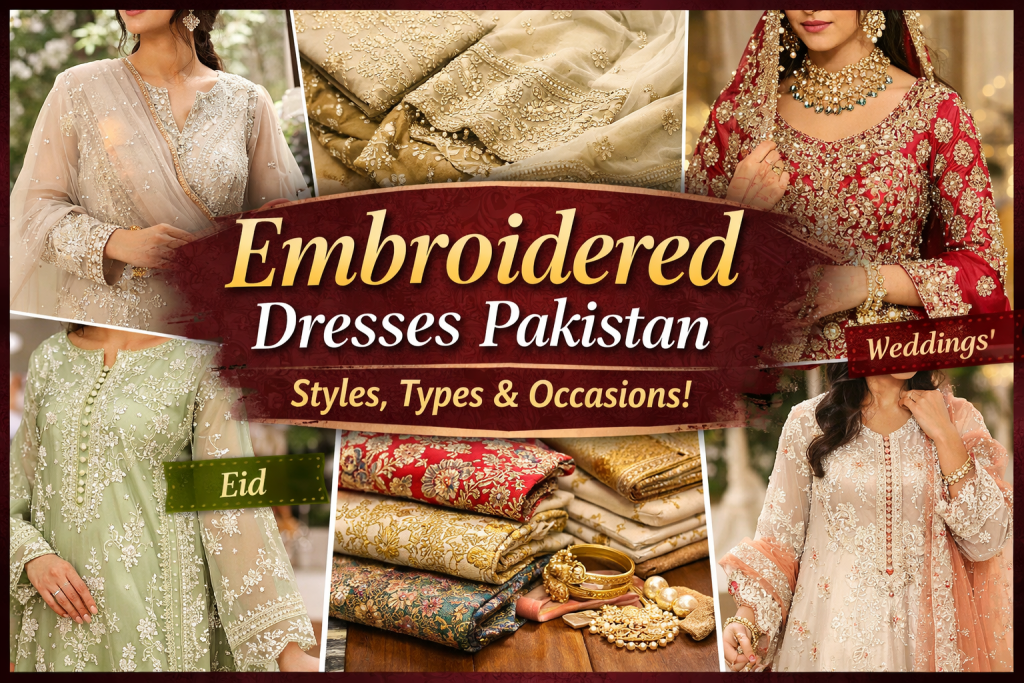
Embroidered dresses in Pakistan are chosen with intention. Women reach for them when the day matters, when the gathering is personal, or when the outfit needs to feel complete without trying too hard. The appeal is not just visual. It sits in the handwork, the weight of the fabric, and the familiarity of patterns that have been part of local dressing for generations.
At Sultan By Mak, we work closely with how embroidered dresses Pakistan women actually wear, not just how they appear in lookbooks. Some prefer light threadwork that feels easy for long days, others choose dense embroidery that holds its own at formal gatherings. What matters is balance. Design should feel intentional, wearable, and suited to the moment, not overwhelming or performative.
Embroidered Dresses Pakistan Latest Trends
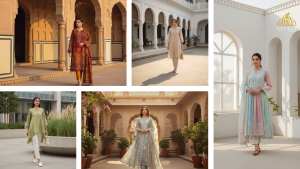
Recent trends show a move toward restraint. Instead of dense surface work, embroidery is being used with purpose, placed where it complements the cut and keeps the outfit wearable. Necklines, sleeve panels, and borders are taking priority over all-over designs.
Fabric and color decisions now follow lifestyle needs. Breathable materials are preferred for daytime wear, while organza and silk blends appear in evening dressing. Softer palettes dominate, chosen for their versatility and ability to remain relevant beyond one season.
Popular Embroidered Dress Styles
Style choices are driven by how women plan to wear the outfit, not by trend alone. Clean silhouettes remain dominant, especially when comfort and movement matter.
Straight shirts with subtle embroidery for everyday and semi-formal wear
A-line and panelled shirts that allow ease and flow
Long shirts paired with trousers for festive occasions
Shorter shirts with defined embroidered borders for casual settings
Light shirts styled with embroidered dupattas to add visual depth
The embroidery augments the design instead of overpowering it. The main idea is to create balance, so the outfit feels polished and complete without looking bulky.
Types of Embroidered Dresses for Eid and Weddings
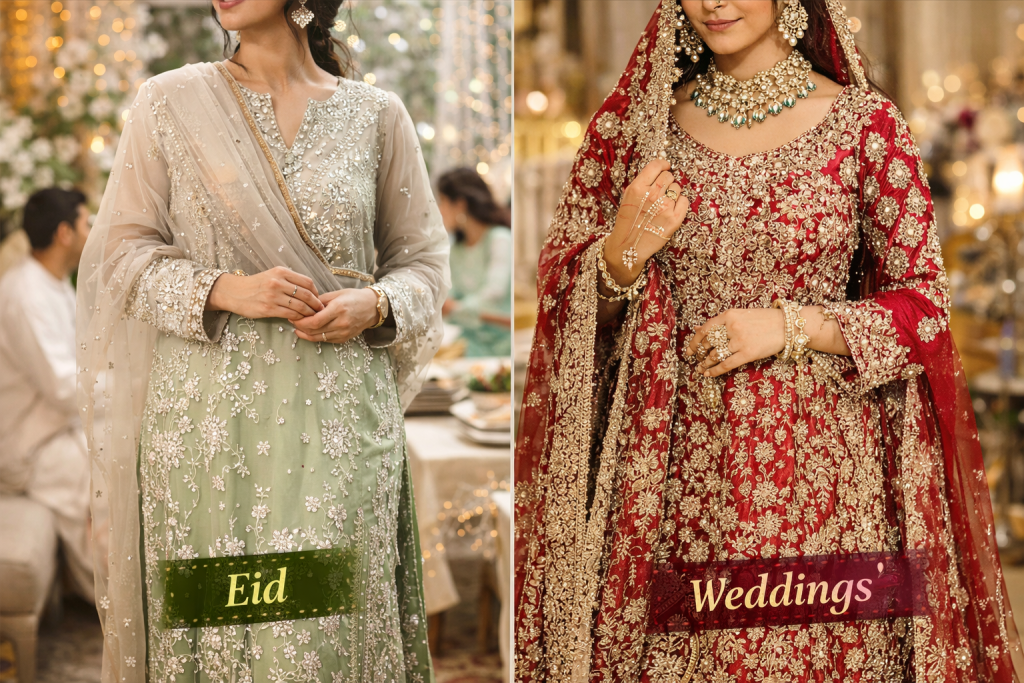
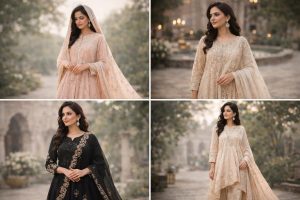
Occasion shapes how embroidery is worn, and most women instinctively dress with that awareness. For Eid, the focus stays on ease. Light handwork, breathable fabrics, and relaxed silhouettes make it possible to move comfortably through prayers, visits, and long hours with family. The embroidery adds character, but never becomes a burden.
Wedding wear moves in a different direction. Here, embroidery carries weight, both visually and literally. Richer surfaces, layered fabrics, and deeper tones are chosen to suit formal settings and evening events. These outfits are meant to stand out, not blend in. The real distinction between the two is not style alone, but how much detail the moment can carry without feeling forced.
Q&A – Embroidered Dress Selection
What embroidery styles are popular in Pakistan?
Thread embroidery, subtle zari work, and mixed techniques remain popular, especially when used sparingly and placed with intention.
How do Eid and wedding embroidered dresses differ?
Eid dresses focus on lightness and comfort, while wedding dresses carry heavier embroidery and richer finishes.
Are embroidered dresses suitable for semi-formal events?
Yes. Light embroidery on breathable fabrics works well for semi-formal gatherings when paired with minimal accessories.